

From Functional to Finished: Understanding Layered Window Treatments
/When designing custom window treatments, one of the most important considerations is how each layer contributes to the overall function and feel of a space.
Most windows are asked to do more than one thing. They may need to provide privacy, manage natural light, soften architectural features, preserve views, or contribute to the overall design of the room. Rather than relying on a single treatment to accomplish everything, a layered approach allows each element to serve a distinct purpose.
At Savannah Window Fashions, layered window treatments are often the foundation of a well-designed solution because they create flexibility, comfort, and a more finished result. Understanding how those layers work together can help homeowners make more informed decisions when planning a new home, renovation, or room update.
Layer One: Hard Treatments as the Foundation
The starting point for most windows is a hard treatment: a shade, a blind, or a shutter. This is the functional foundation of the window, and it's where the practical work happens: light control, privacy, UV protection, and energy efficiency.
Within that category, there's a wide range of options, and the right one depends on the room, the window, and how you use the space.

Roller shades and solar shades are among the most versatile, with solar fabrics available in varying openness factors that let you dial in exactly how much light and visibility you want.
Woven wood shades bring natural texture and warmth while filtering light in a way that feels organic rather than utilitarian, particularly well-suited to living rooms, dining rooms, and bedrooms in coastal homes.
Cellular shades are the energy efficiency choice, with their honeycomb structure trapping air and reducing heat transfer through the glass.
Wood blinds offer precise light control through adjustable slats, with a timeless finish that works especially well in traditional and transitional interiors.
And plantation shutters—a perennial favorite in Savannah and across the Lowcountry—provide durable, long-lasting light control with a classic architectural quality that suits historic and new construction homes alike.
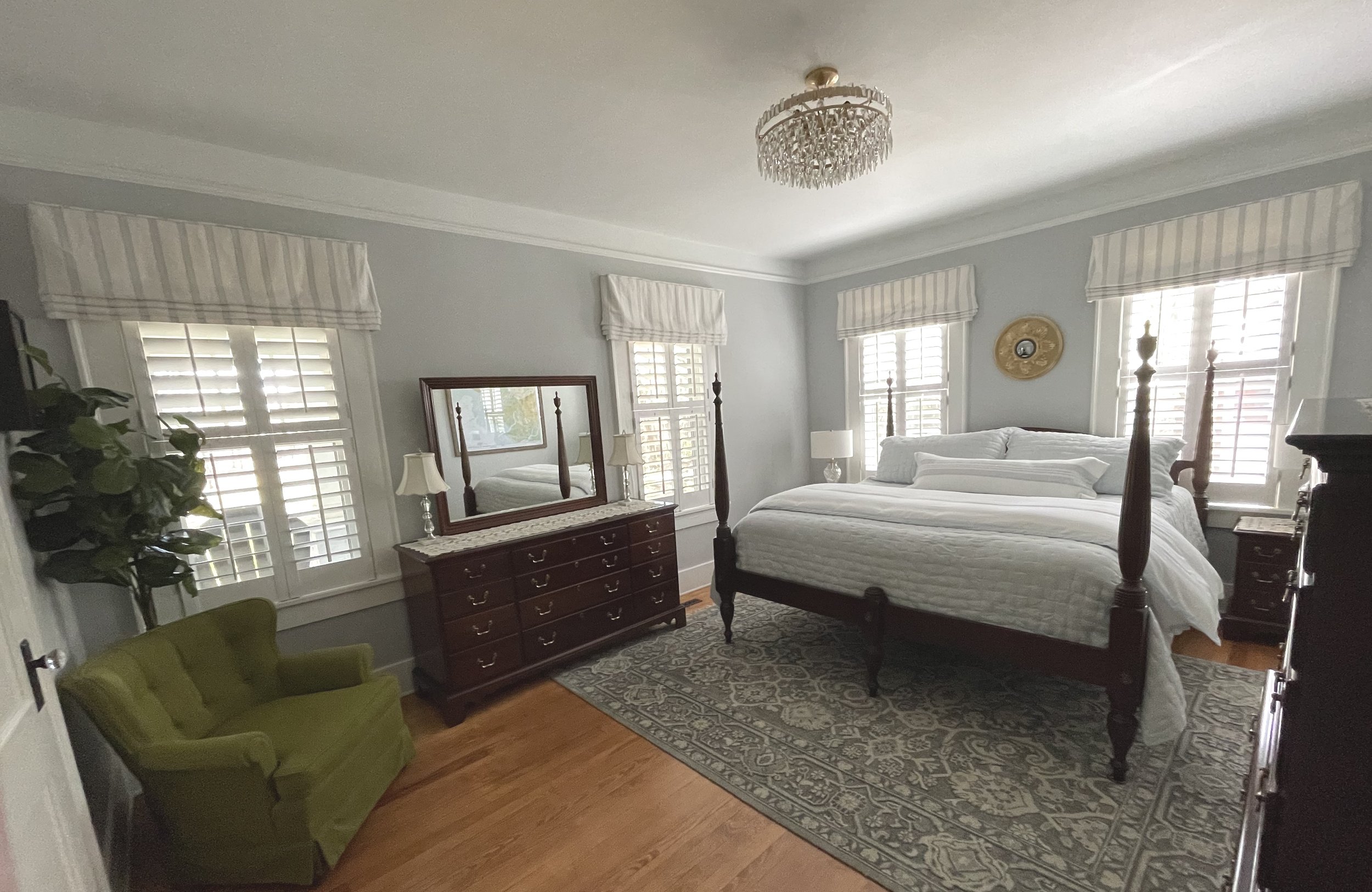
What all of these have in common is that they mount close to the glass, address the window itself directly, and handle the functional requirements that most rooms need to meet. For some spaces—a powder room, a bathroom, a sunroom—a well-specified hard treatment is the complete solution. But in most of the rooms we work in, it's the beginning of the conversation, not the end.
Layer Two: Soft Treatments as the Finishing Touch
Once the functional foundation is in place, soft treatments, primarily drapery, do something different. They finish the window. They bring fabric, color, and warmth into a space in a way that hard treatments simply can't. And depending on how they're specified, they can do real functional work as well.
Drapery panels can be stationary, framing the window on either side without ever moving. In this configuration, they're essentially architectural. They frame the view, soften the wall, and add presence to the room. This works beautifully in formal spaces, dining rooms, or anywhere the window treatment is primarily a design element rather than an operational one.
When panels are operational, meaning they can be drawn closed over the hard treatment, they take on additional roles. Lined drapery adds a meaningful layer of insulation. A standard cotton sateen lining improves the drape and protects the face fabric from UV damage.
Interlining adds another layer of bulk that significantly enhances the insulating properties of the panel, reducing heat transfer through the window in summer and retaining warmth in winter. For clients in the Lowcountry who deal with both intense summer heat and the occasional cold snap, that insulation benefit is a practical consideration, not just a luxury.
For light control, lining selection plays an important role. Room-darkening and blackout linings can enhance privacy, reduce incoming light, and improve overall comfort within the space. When paired thoughtfully with the treatment beneath, drapery becomes more than a decorative layer—it contributes meaningfully to how the room functions throughout the day and evening.
Some of the most common layered combinations we specify reflect this balance between hard foundation and soft finish:
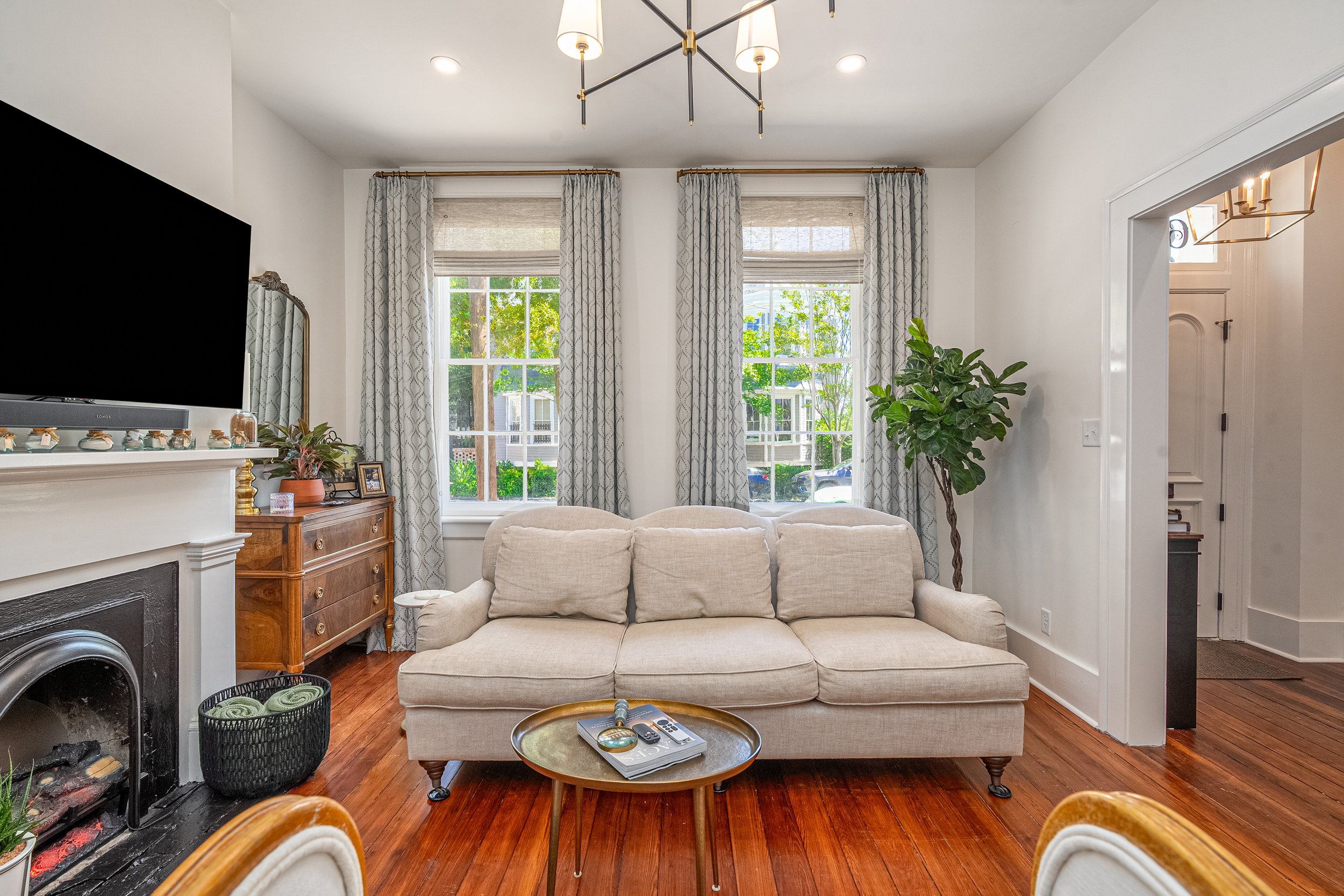
A woven wood shade paired with a drapery panel works well in living rooms and dining rooms where texture and warmth are the priority but the room also sees significant afternoon light or needs privacy in the evening. The shade handles the daytime light; the drapery handles the evening, and together they give the room a finished, intentional quality that neither would provide alone.
A solar shade paired with an operational drapery panel solves the classic Lowcountry challenge of a beautiful water or marsh view that also needs evening privacy. During the day, the shade is down and the panels are open—glare managed, view preserved. In the evening, the panels close. Two jobs, two layers, each doing its part.
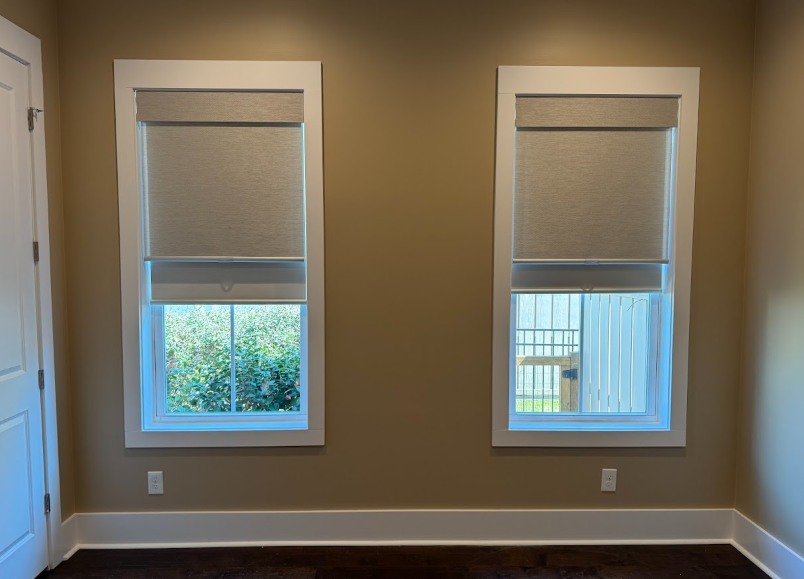
A room-darkening roller under a Roman shade addresses spaces where the functional shade alone feels too utilitarian for the room, but the decorative fabric treatment doesn't have enough opacity on its own.
A sheer panel behind a lined drapery panel gives flexibility in rooms where you want soft diffused light during the day—with some privacy—and real light control at night. The sheers stay closed and filter the light without providing a clear view in; the drapery draws over them when full coverage is needed.
Layer Three: Top Treatments and True Light Control
For clients who want genuine blackout conditions —the kind that make a room dark in the middle of the day—two layers usually aren't enough. This is where a top treatment comes in.
A valance or cornice closes the gap above the drapery hardware. That gap is the problem most people don't anticipate. A room-darkening shade handles the glass. Drapery panels with blackout lining cover the sides. But above the rod, between the top of the hardware and the ceiling, light leaks in. In a room with high ceilings, that gap can be substantial. A top treatment like a cornice box, a fabric valance, or even a ceiling-mounted track that allows the drapery to start at the ceiling, eliminates it.
This is what I mean when I tell clients that truly darkening a room requires three layers: a room-darkening shade at the glass, lined drapery panels on the sides, and a top treatment at the ceiling. All three working together, each covering what the others can't reach. When that system is in place, the room gets dark.

The Lowcountry Light Factor
Window treatment decisions are influenced by geography as much as design.
Throughout Savannah, Bluffton, Hilton Head, Fripp Island, and the surrounding Lowcountry, homeowners often contend with expansive windows, strong natural light, waterfront views, and long hours of sun exposure. These conditions make thoughtful light management an important consideration in many homes.
Layered window treatments allow homeowners to balance privacy, comfort, views, and natural light while maintaining a tailored and cohesive look throughout the home.
A thoughtfully layered window treatment allows each element to contribute something different. Privacy, light control, comfort, and design are addressed together rather than through a single product. The result is a solution that feels more complete, more flexible, and better suited to the way the space is used.
If you're working through window treatment decisions for a new build, a renovation, or a room you're finally getting right, we'd love to help you think through it.
Reach out to our team at hello@savannahwindowfashions.com or call 912-354-0836 to schedule a discovery call. We work with homeowners and interior designers throughout Savannah, Bluffton, Hilton Head, Palmetto Bluff, and the surrounding Lowcountry.
