
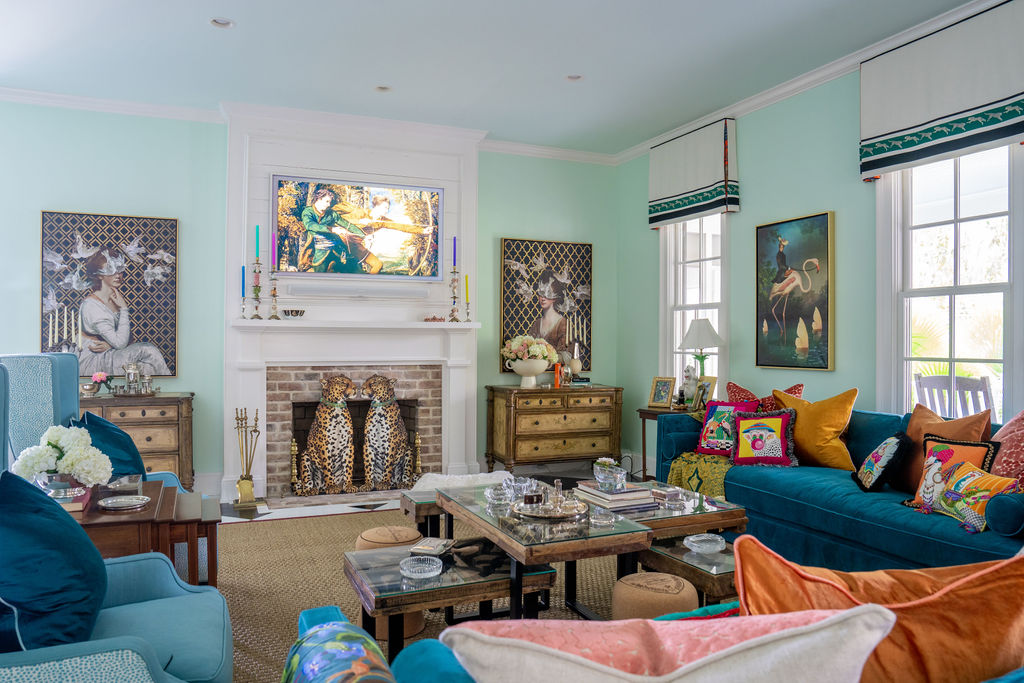
Some projects stay with us because of how they look when they’re finished. Others are memorable because we know how much thought, collaboration, and problem-solving went into getting them there.
Our work with William Peacock Design at Ford Field & River Club in Richmond Hill, Georgia, gave us plenty of both. Featured in Savannah Magazine and photographed by Kelli Boyd Photography, this home is filled with color, pattern, personal collections, and details that reveal themselves the longer you look. Our team created custom window treatments and soft furnishings throughout the home, including drapery, valances, slipcovers, bedding, table skirts, upholstery, Roman shades, and shutters.
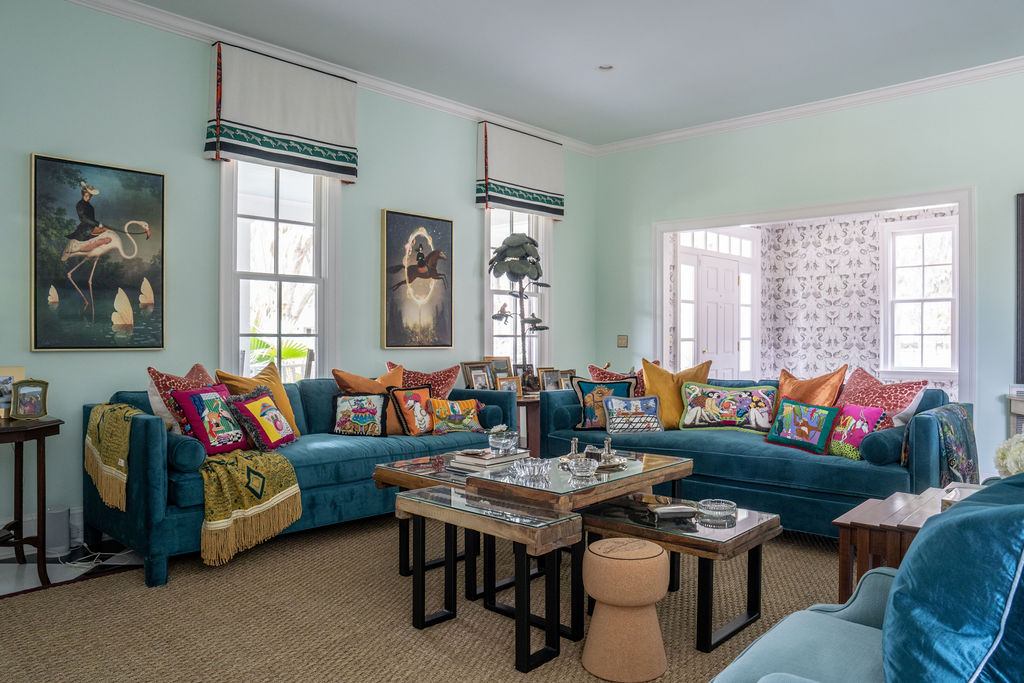
The finished photographs tell the design story beautifully, but they don’t show the hours spent in our Savannah workroom figuring out how a fabric would behave, where a pattern should fall, how to make an unconventional pleat function, or how to turn the homeowner’s hand-stitched needlepoint into a custom window treatment.
That behind-the-scenes work is an important part of what a full-service custom workroom brings to a project.
A Design Idea and a Fabrication Plan Aren’t Always the Same Thing
The primary bedroom gave us one of the best examples.
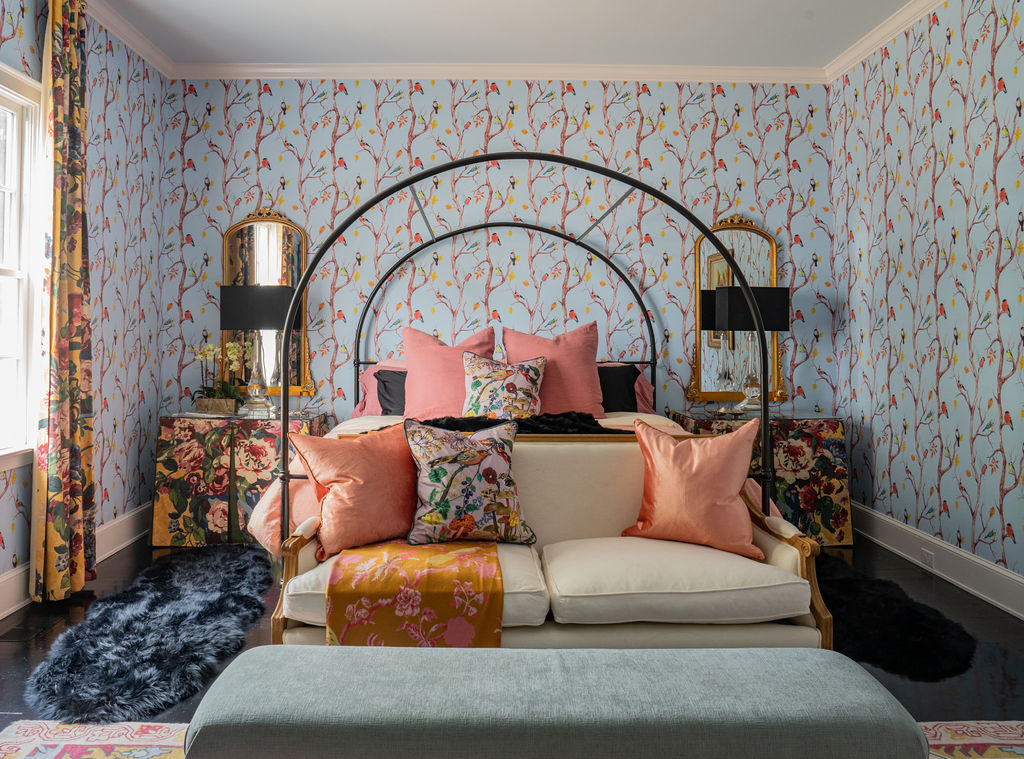
William selected a large-scale floral fabric for the drapery and wanted the tailored, structured look of a box pleat. He also wanted the draperies to traverse so the homeowners could open and close them.
There was a technical problem to solve: traditional box pleats work best on stationary decorative panels. They aren’t designed to travel smoothly across a track.
Instead of changing the design direction, we spent time in the workroom figuring out how we could achieve the look William wanted while giving the homeowners the functionality they needed. We ultimately developed a two-prong inverted pleat, stitched from the back, that gave us the appearance of a box pleat from the front while allowing the draperies to operate properly.
This is one of the reasons we enjoy collaborating closely with interior designers. A designer may come to us with a very specific vision, and our job is to understand how to construct it, anticipate where we might run into challenges, and find a solution that supports the original design.
We’re not interested in making something complicated simply for the sake of calling it custom. We want the finished treatment to look right, function properly, and hold up to everyday use.
Much of the Important Work Happens Before We Start Sewing
The floral fabric in the primary bedroom also had an unusually large pattern repeat, which meant we had to plan carefully before cutting into it.
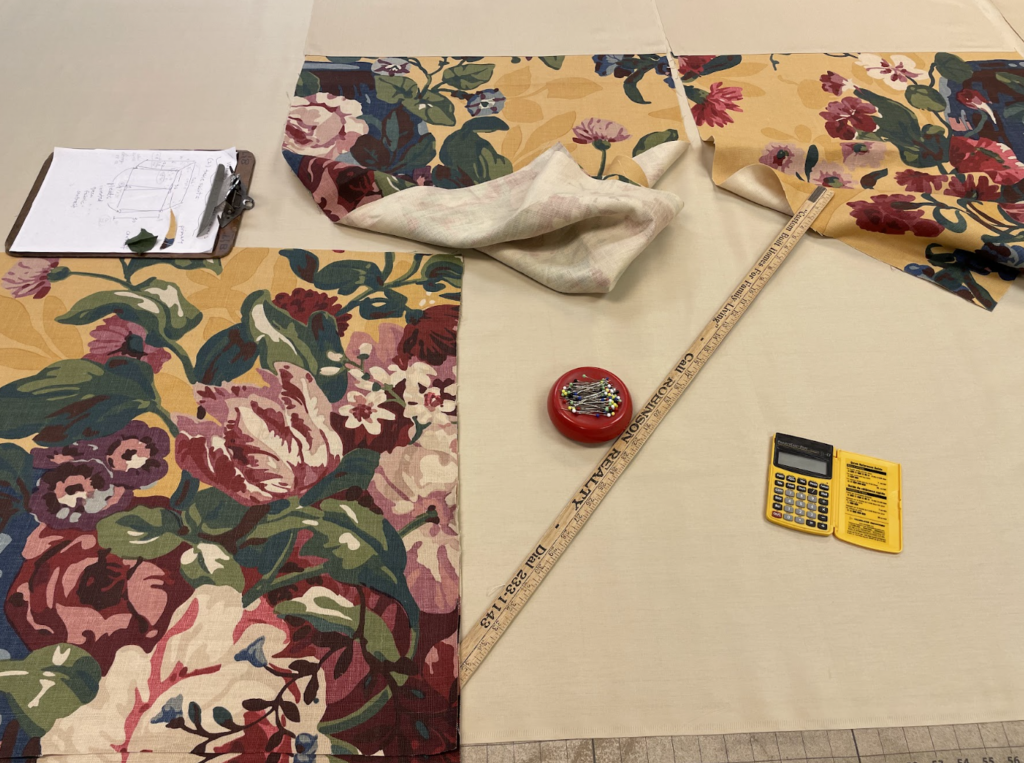
When you’re working with a large-scale pattern across multiple drapery panels, pattern placement and matching take priority over getting the maximum possible use from every inch of fabric. That naturally creates cuts that aren’t suitable for the primary treatment.
Rather than automatically considering those pieces waste, we looked at the rest of the bedroom and found another use for them. We had enough fabric to create a custom bed skirt and tailored covers for the bedside tables, which carried the pattern through the room while making thoughtful use of material that otherwise might have gone unused.
This is also a good example of why we encourage homeowners and designers to involve us early in a project. Fabric selection affects much more than color and pattern. Repeat, width, weight, fiber content, lining, treatment style, hardware, and the way a fabric behaves can all influence how much material we need and how we approach fabrication.
The earlier we can identify those considerations, the easier it is to make informed decisions and avoid surprises later.
Custom Should Make a Room Work Better, Not Just Look Better
The bedside table covers presented another interesting challenge. They needed to conceal open storage beneath the tables, but the homeowners still needed to be able to use that storage easily.
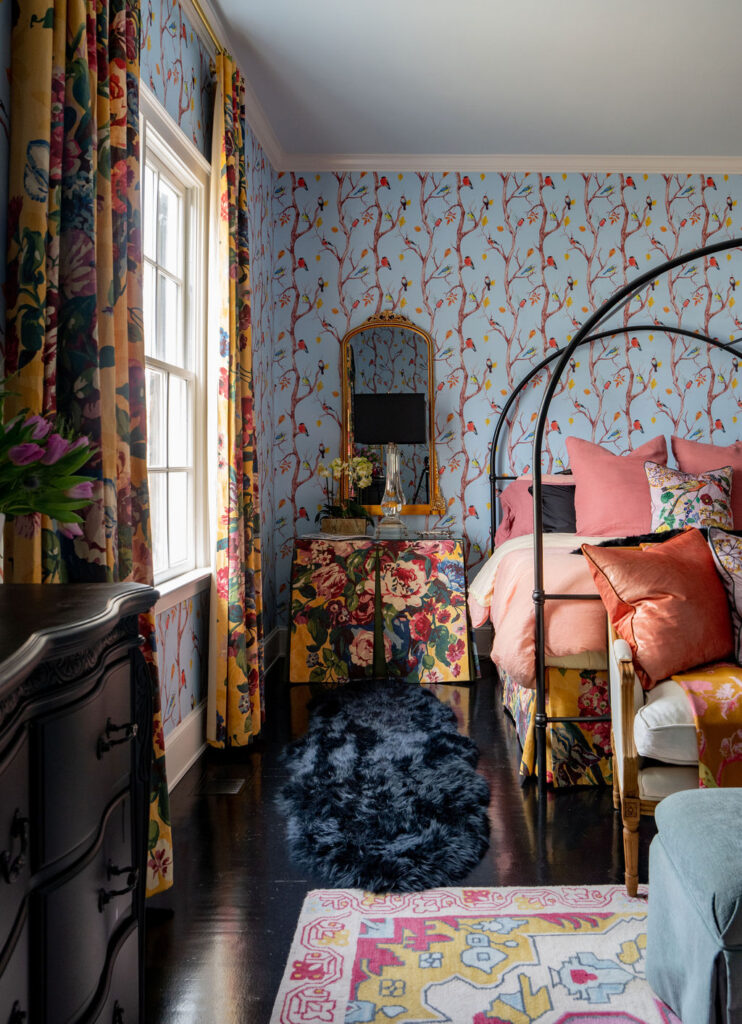
We incorporated openings into the pleated design so individual sections could lift independently. The homeowners could reach the storage without pulling up or disturbing the entire table skirt, and when everything was closed, those access points disappeared back into the design.
It’s a small detail, but it’s exactly the kind of thing we think about when we’re working through a custom project. How will the homeowner actually use this? What needs to move? What needs to stay accessible? Is there a way to solve a practical need without compromising the designer’s vision?
A beautiful treatment that becomes frustrating to live with isn’t a successful treatment. Function needs to be part of the conversation from the beginning.
The Details That Look Effortless Usually Aren’t
Throughout the home, William used contrast fabrics in ways that give you something new to notice when you look closely.
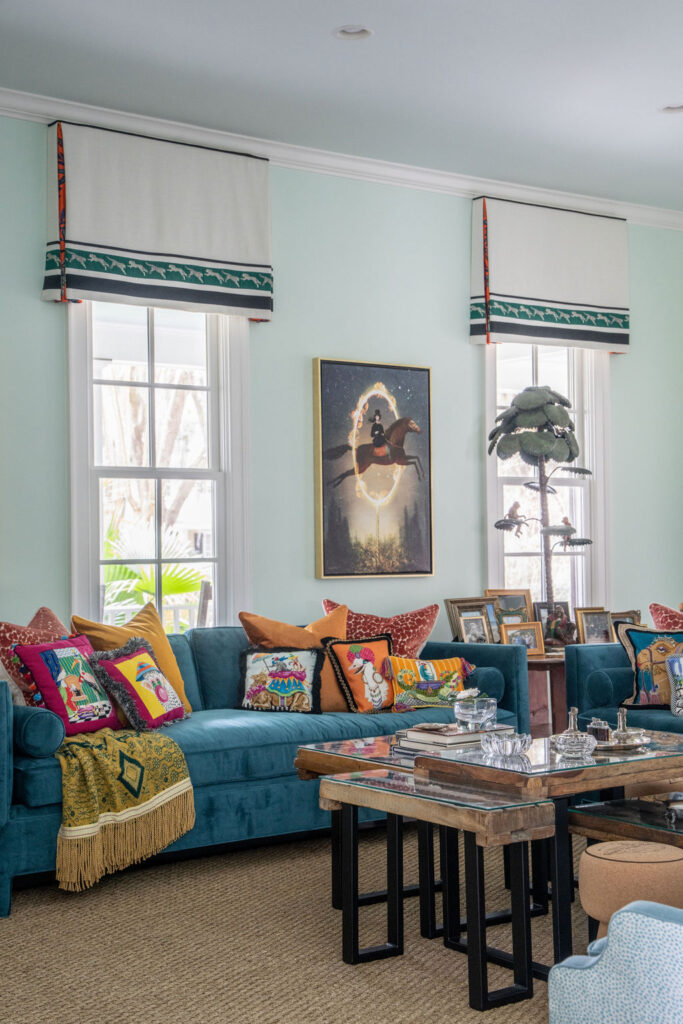
For the living room valances, we incorporated a contrasting fabric inside the pleats and added a Scalamandré trim that connects to other elements in the surrounding spaces. The dining room chair slipcovers use a similar idea, with a second fabric tucked inside their pleats and revealed through the movement of the slipcover.
Details like these may look simple once everything is installed, but getting them right requires precision in the workroom. We have to think about exactly where the contrast should appear, how much should show, where a pattern should land, how the trim relates to the scale of the treatment, and how all of those details will change once a flat piece of fabric becomes a three-dimensional finished product.
That’s where an experienced seamstress brings far more to the project than sewing expertise. In fact, much of a fabricator’s work happens before the sewing machine is ever turned on. Our workroom team understands construction, fabric behavior, proportion, pattern placement, and how each of those decisions affects the way a finished window treatment will hang, function, and look once installed.
Turning the Client’s Needlepoint Into Something Entirely Her Own
One of the most personal pieces we created for this home was installed after the professional photography had already taken place.
The client is an avid needlepointer, and she and William brought us five panels that she had stitched herself with the idea of incorporating them into a custom valance for the library. We loved the idea, but there were quite a few details to work through before we could start fabrication.
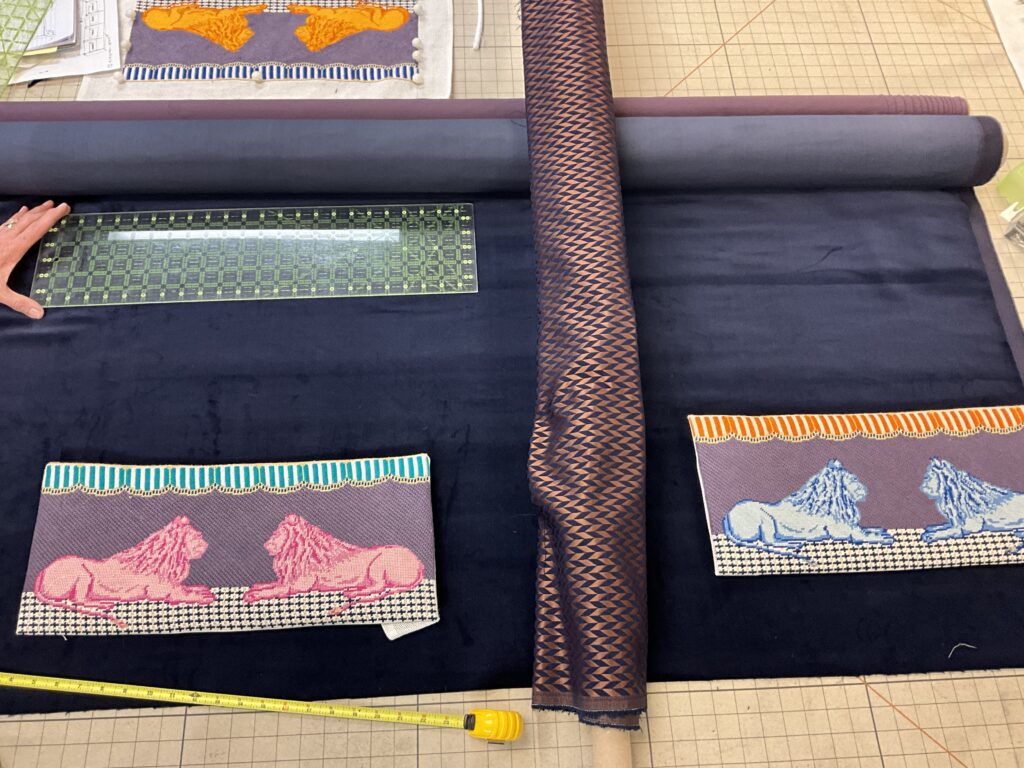
Together, we considered the color sequence of the five needlepoints and carefully calculated where each one needed to sit between the pleats of the long velvet valance. Once our team began attaching the needlepoints, we discovered another challenge: the pieces started shifting slightly out of square as we worked with them. We steamed them during fabrication to help maintain their shape and keep everything properly aligned.
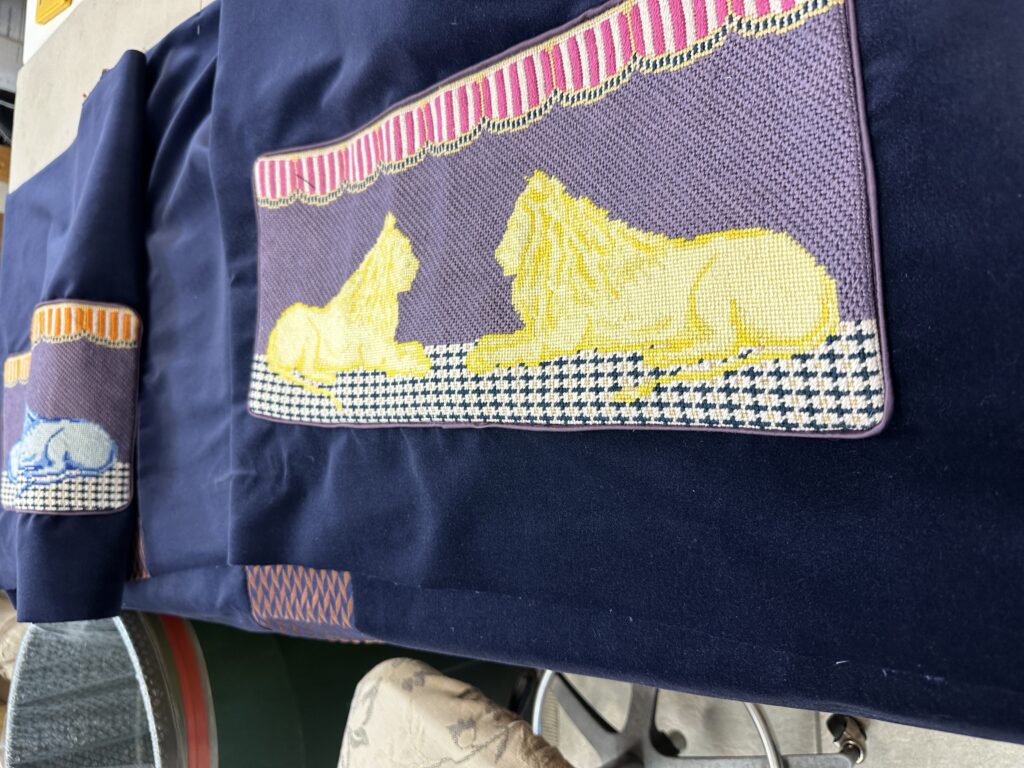
We also felt that sewing the needlepoint directly onto the velvet would leave the edges looking unfinished. Our solution was to frame each piece with a tiny micro welt, which gave the needlepoint a clean edge and related nicely to the contrast welt on the valance. Connie also adjusted the pleat construction to allow a little more of the contrast fabric inside to peek through.
There wasn’t a standard specification we could follow for this treatment. The design developed through conversations with William, careful planning in the workroom, and adjustments as we worked with the materials.
We called it “the epitome of bespoke design” at the time, and it really was. More importantly, it allowed something the homeowner had made with her own hands to become a permanent and useful part of her home.
What Does a Full-Service Custom Workroom Actually Bring to a Project?
This project is a good illustration of the difference between asking a workroom to fabricate something and bringing a window treatment specialist onto the project as a partner.
At Savannah Window Fashions, fabrication is only one part of our job. We measure, help develop and refine designs, advise on fabrics and hardware, identify technical issues, calculate specifications, fabricate in our Savannah workroom, coordinate the many moving parts of the project, and professionally install the finished treatments.
That level of involvement is especially valuable on whole-home projects and designs that don’t fit neatly into standard specifications.
For our interior design partners, it means they can bring us an idea and know that we’ll help them work through the technical details required to execute it. We understand that our role is to support the designer’s vision and make their job easier, not add another layer for them to manage.
For homeowners, it means you don’t need to become an expert in pattern repeats, fullness, pleat construction, hardware projections, lining, mounting requirements, or any of the other details that go into custom window treatments. You need a team that understands those details and knows which questions to ask before they become problems.
Builders and architects benefit from that expertise as well, particularly when window treatments need to coordinate with construction details, mounting conditions, electrical requirements, millwork, or other elements of the home.
The Finished Photos Are Only Part of the Story
When we look back at the photographs of this Ford Field & River Club home, of course we notice the color and pattern. It would be pretty hard not to.
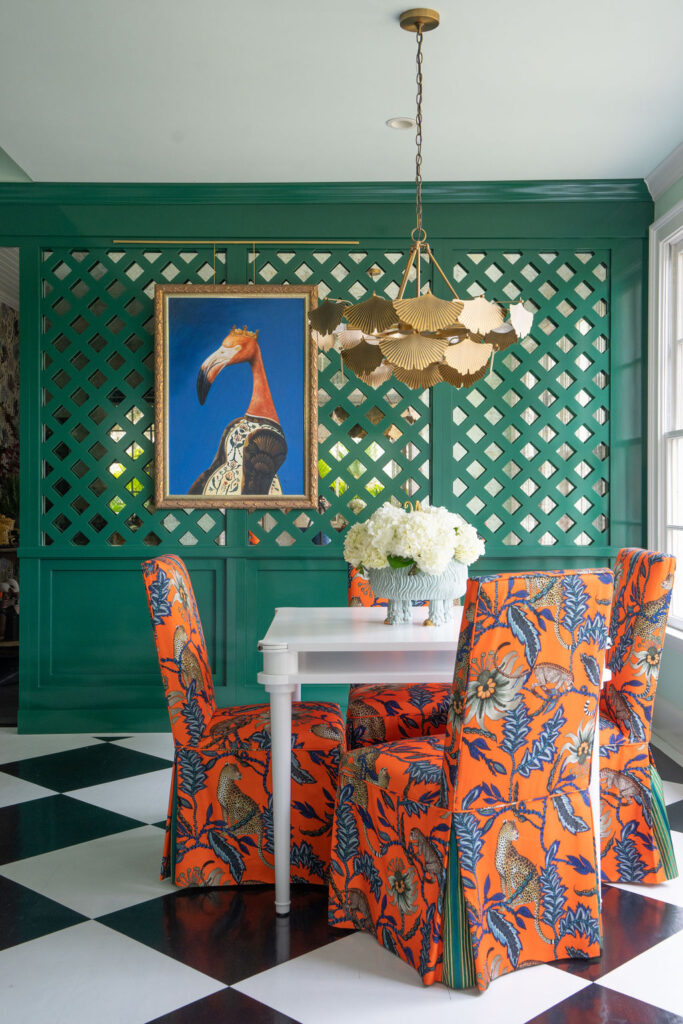
But we also remember the work behind those rooms: figuring out how to make an unconventional drapery pleat function, planning around a very large pattern repeat, finding a useful purpose for remaining fabric, building hidden access into table skirts, positioning contrast fabric precisely inside pleats, and gathering around the workroom table to figure out the best way to incorporate five handmade needlepoints into a velvet valance.
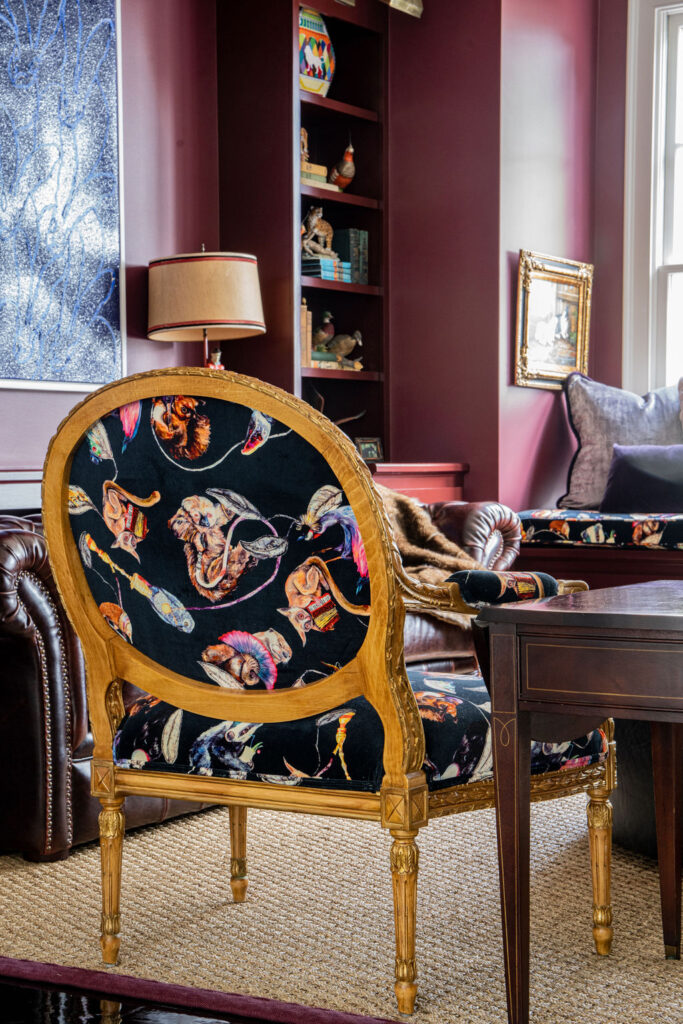
Those decisions weren’t about making the project more complicated; they were about getting it right.
That’s what good custom work should do. It should support the designer’s vision, solve the practical needs of the homeowner, respect the materials, and result in something that looks as though it was always meant to be there.
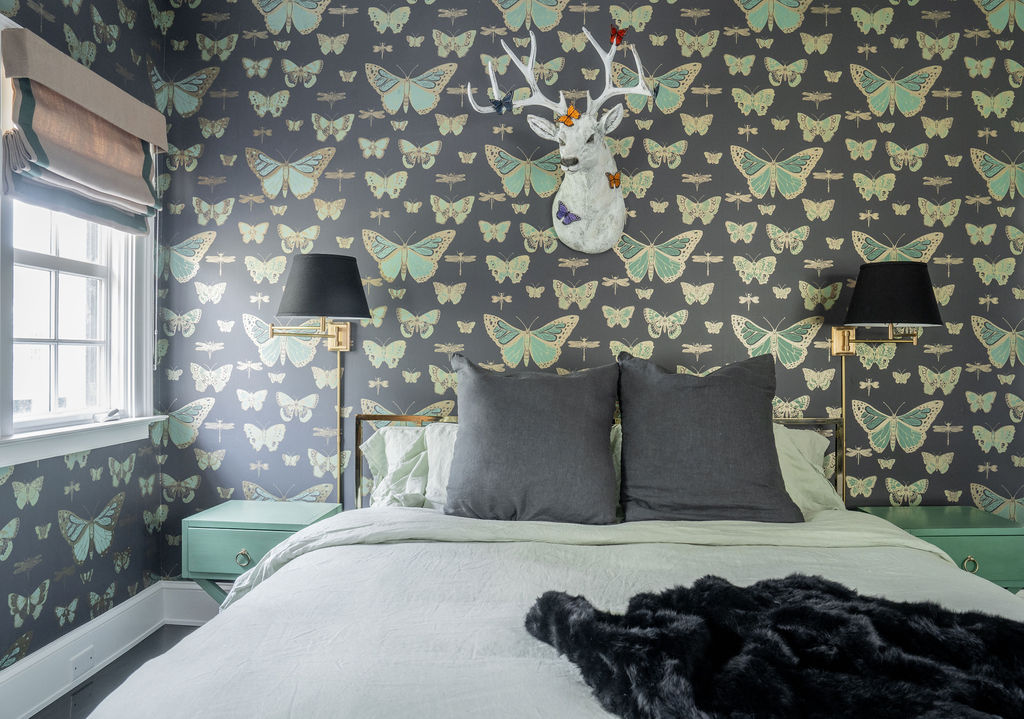
The photographs may show the finished product, but the expertise behind it is a large part of what makes the finished product possible.
Savannah Window Fashions partners with homeowners, interior designers, architects, and custom home builders on full-service custom window treatment projects in Savannah, Richmond Hill, Bluffton, Hilton Head Island, Skidaway Island, and throughout the Lowcountry.
If you’re planning a project that requires thoughtful design, technical expertise, and a team to manage the details from initial measurements through professional installation, we’d love to hear about it.