

Designing Window Treatments for a Luxury Condo in Savannah’s Eastern Wharf
/Designing window treatments for a luxury condo on the riverfront isn’t as straightforward as it might seem. Large expanses of glass, varied window shapes, and the need for both privacy and natural light control all have to be considered.
We partnered with interior designer Arlen Brown on a full-home project in Savannah’s Eastern Wharf that highlights how thoughtful planning and the right approach can make all the difference.
Start with How the Home Will Be Used
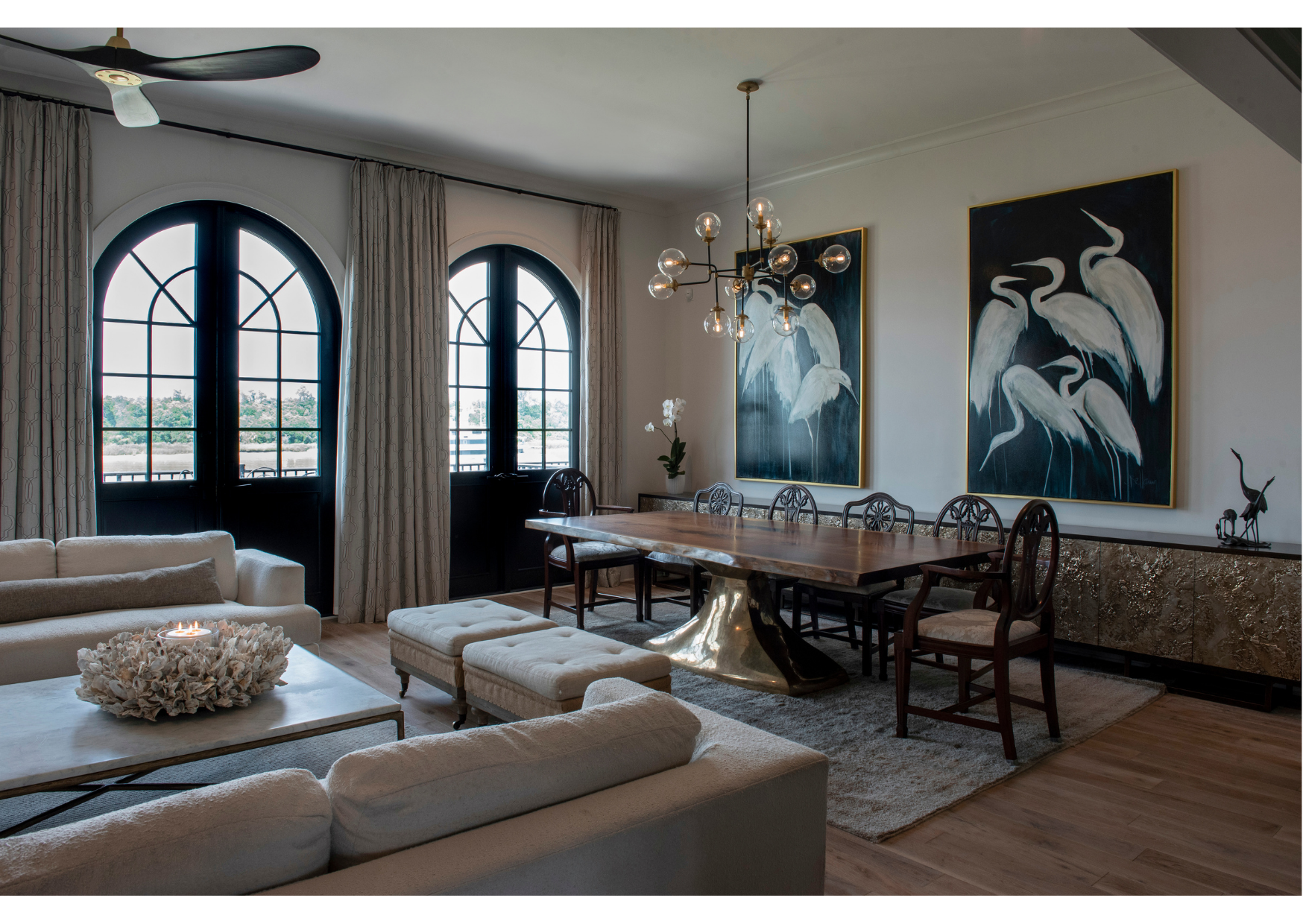
Before selecting fabrics or hardware, it’s important to understand how the home will function day to day.
In this case, the condo is a primary residence, and that distinction shaped how we approached the project from the start. We were involved during the construction phase, which gave us the opportunity to consult on power supply planning for motorized window treatments before the walls were closed.
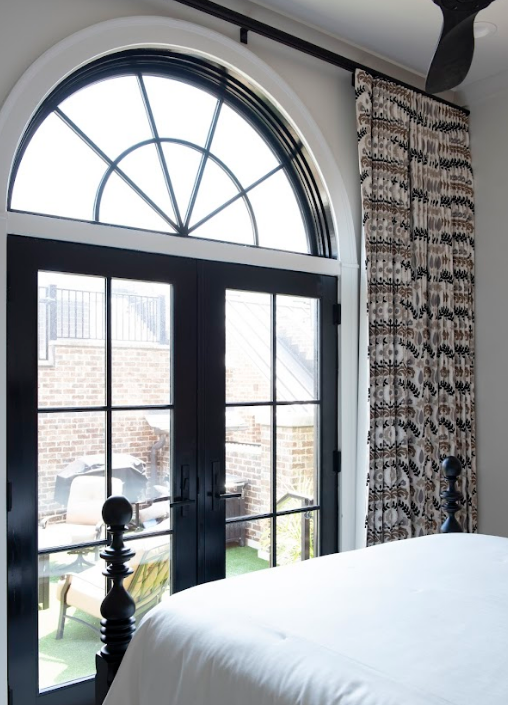
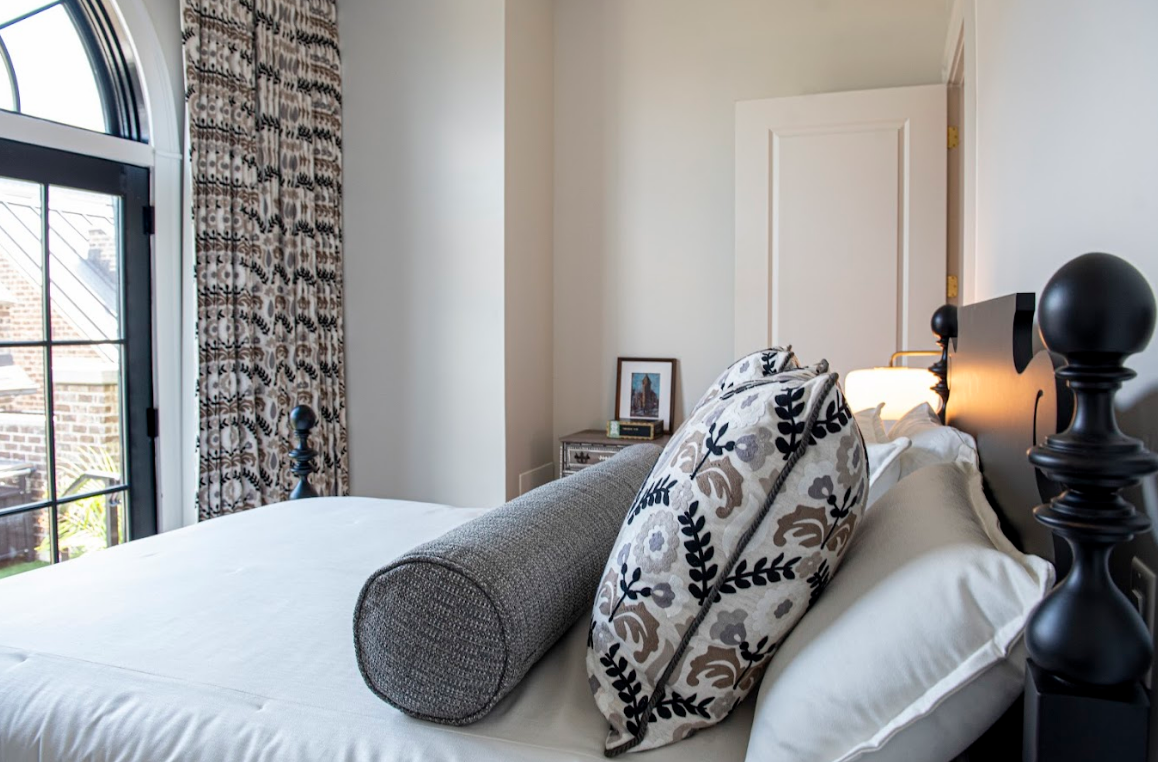
In the primary bedroom, we specified motorized sheers and blackout drapery—one motor per layer—using plug-in motors because outlets had been positioned behind the drapery stack during construction. The homeowners can open the drapery at the touch of a button to take in the river views. Custom bedding and decorative throw pillows complete the room.
The top-floor cigar room called for a different approach. A series of ripplefold one-way draw panels felt right for the fabric—a heavily textured design that needed a heading style to match its character. The lining was custom-colored to coordinate with the exterior stucco, so the view from the porch stays seamless whether the panels are open or closed. The cigar room door received a matching fabric Roman shade to tie everything together.
In the guest room, the conditions required careful planning: a large offset arched opening, an adjacent television, and operational arched doors leading to the guest patio. We chose ripplefold there as well, specifically to keep the drapery stack as tight as possible and maintain clear access to the patio doors. Baton draw hardware keeps operation simple and intuitive for guests.
Layering Creates Flexibility
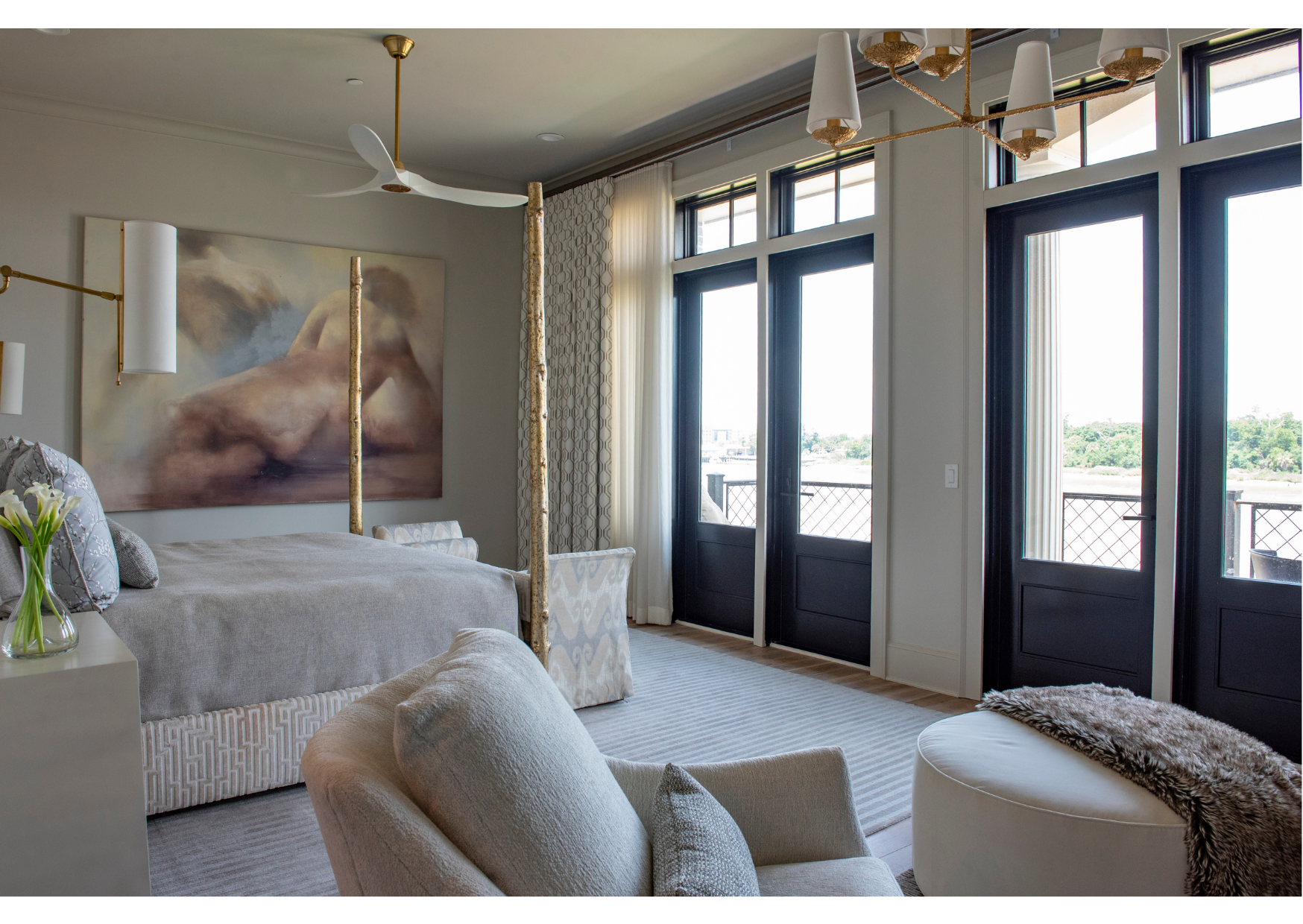
In rooms like the primary bedroom, layering plays an important role in how the space functions throughout the day.
Sheer drapery softens natural light and maintains a connection to the outdoors, while an additional layer provides privacy and light control when needed.
This approach allows a space to transition easily—from bright and open during the day to more private and restful in the evening—without compromising the overall design.
Every Window Requires a Thoughtful Approach
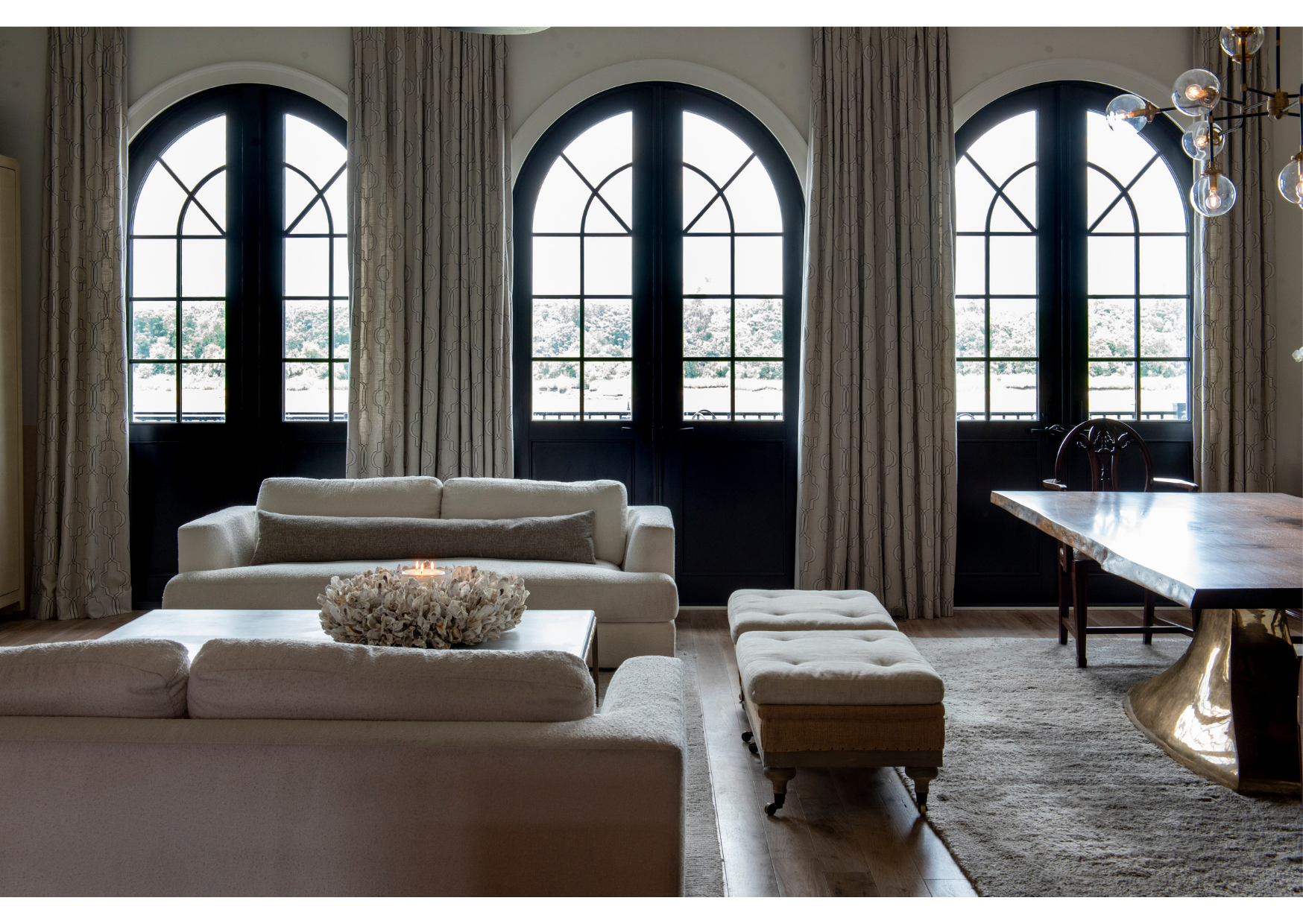
One of the most common misconceptions is that window treatments can simply be repeated throughout a home.
In reality, each window condition requires its own strategy.
For this Eastern Wharf condo, we worked with:
Arched windows that needed careful proportioning
Large glass door openings requiring functional panel layouts
Standard windows that still needed to align with the overall design
Achieving consistency across these conditions comes down to planning—ensuring that scale, placement, and function are all considered before fabrication begins.
Details Matter—Inside and Out
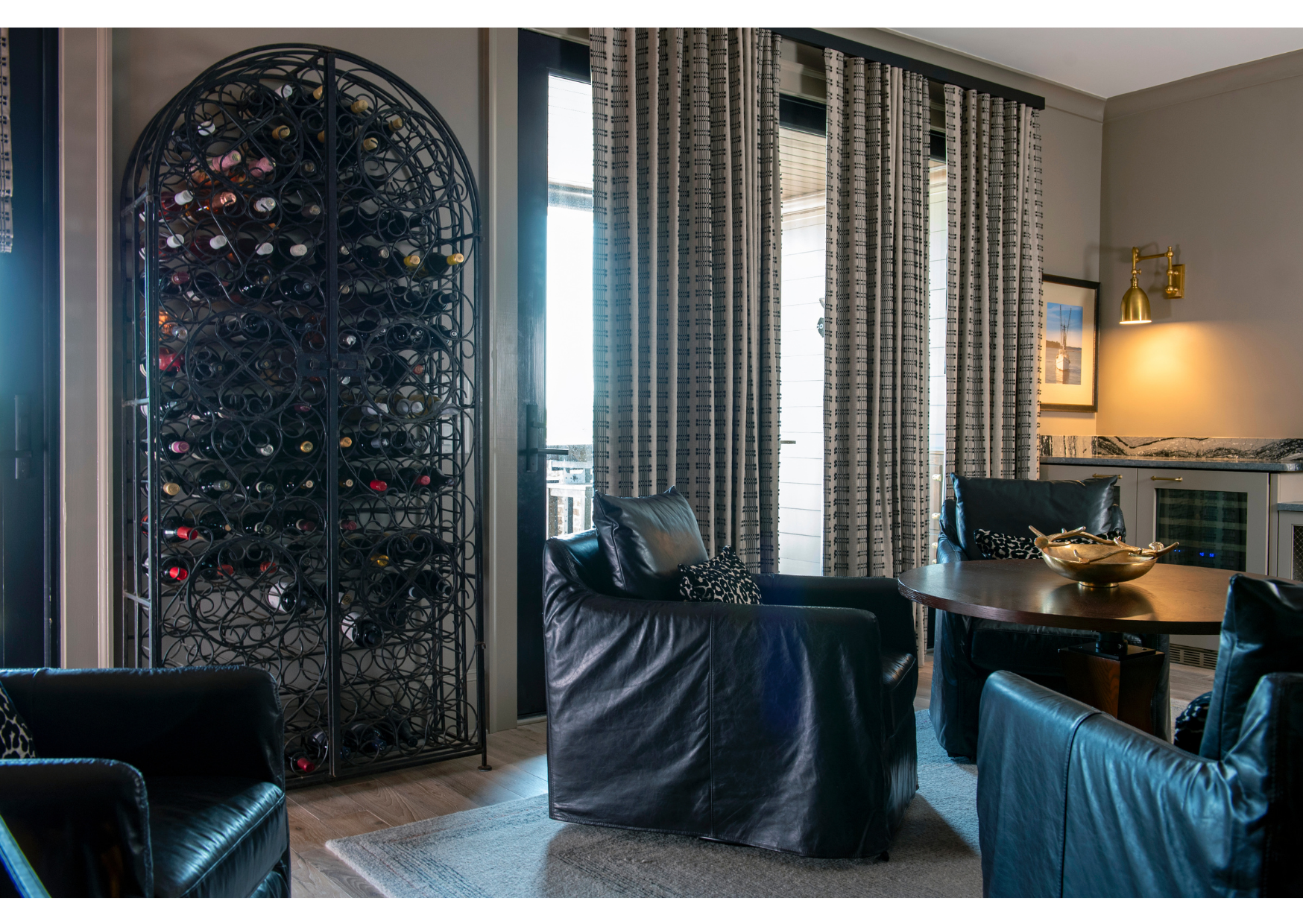
In waterfront and condo settings, window treatments are often visible from both inside and outside the home.
That makes details like lining selection more important than many people expect.
For one of the spaces in this project, the lining was selected to coordinate with the outdoor furnishings on the adjacent porch. When the drapery is closed, the view from outside still feels intentional and connected to the overall design.
It’s a subtle decision, but one that contributes to a more polished result.
Hardware Decisions Are Made Early—and for Good Reason
Hardware plays a significant role in both the appearance and performance of window treatments.
In the primary bedroom, hardware had to support both a motorized sheer layer and a motorized blackout layer—each on its own track—while also coordinating with the architectural elements like crown molding and working cleanly with the drapery stack depth.
In the guest room, the ripplefold track was specified to keep the stack minimal, which was essential for maintaining access to the operational arched doors. Getting these details right required knowing the conditions before fabrication began.
Making these decisions early, especially in new construction, helps avoid delays and ensures everything integrates cleanly with the space.
Custom Bedding Brings the Room Together
Window treatments don’t exist in isolation.
In the primary and guest bedroom, custom bedding—including a tailored coverlet, layered pillows, and a structured bed skirt—helped complete the space.
When these elements are designed together, the result feels cohesive and intentional, rather than pieced together over time.
Why Planning Ahead Makes All the Difference
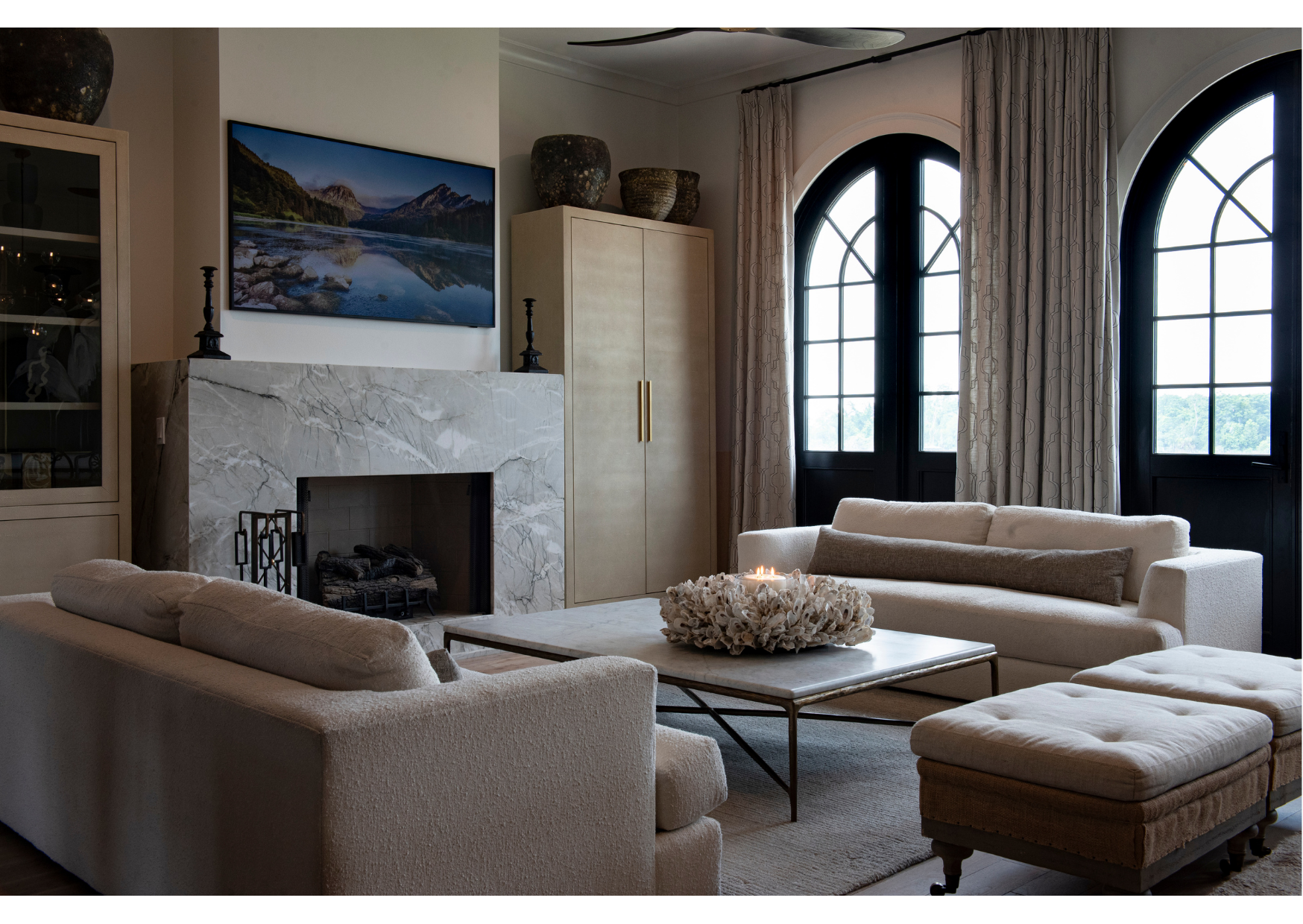
Projects like this are a good reminder that window treatments are not a final step—they’re an integral part of the design process.
From coordinating with architectural details to planning for function and longevity, the earlier these decisions are made, the better the outcome.
Working with a full-service team helps ensure that every detail is considered before it becomes a challenge.
Planning a Project in Savannah or Bluffton?
Whether you’re furnishing a primary residence or a second home, custom window treatments require thoughtful planning and coordination.
Our team works closely with homeowners, designers, and builders to manage every step of the process, so your project is completed with clarity, efficiency, and attention to detail.
